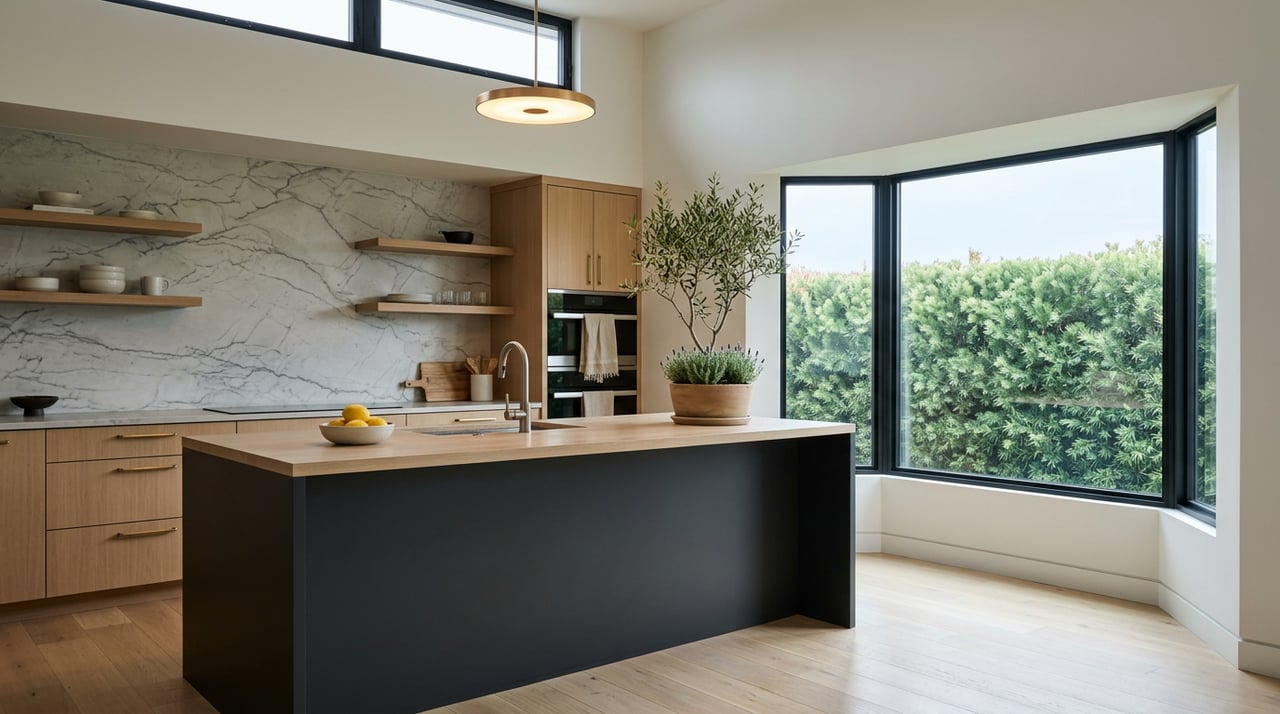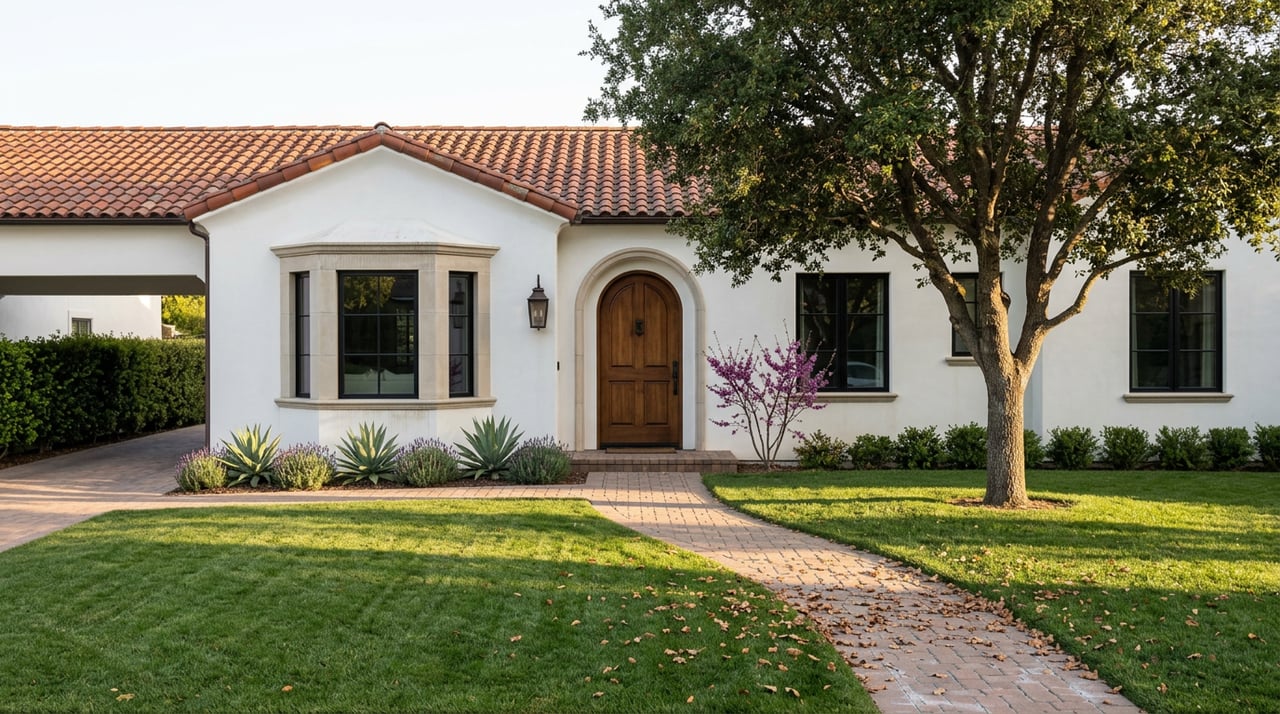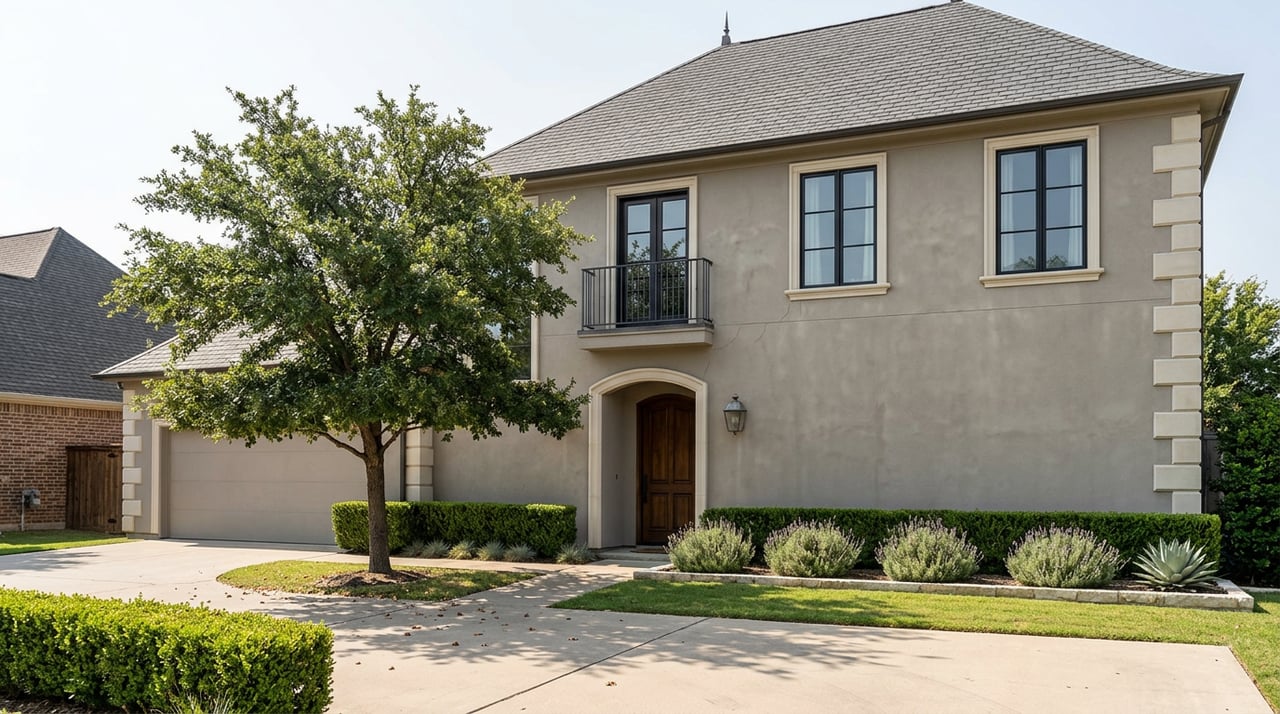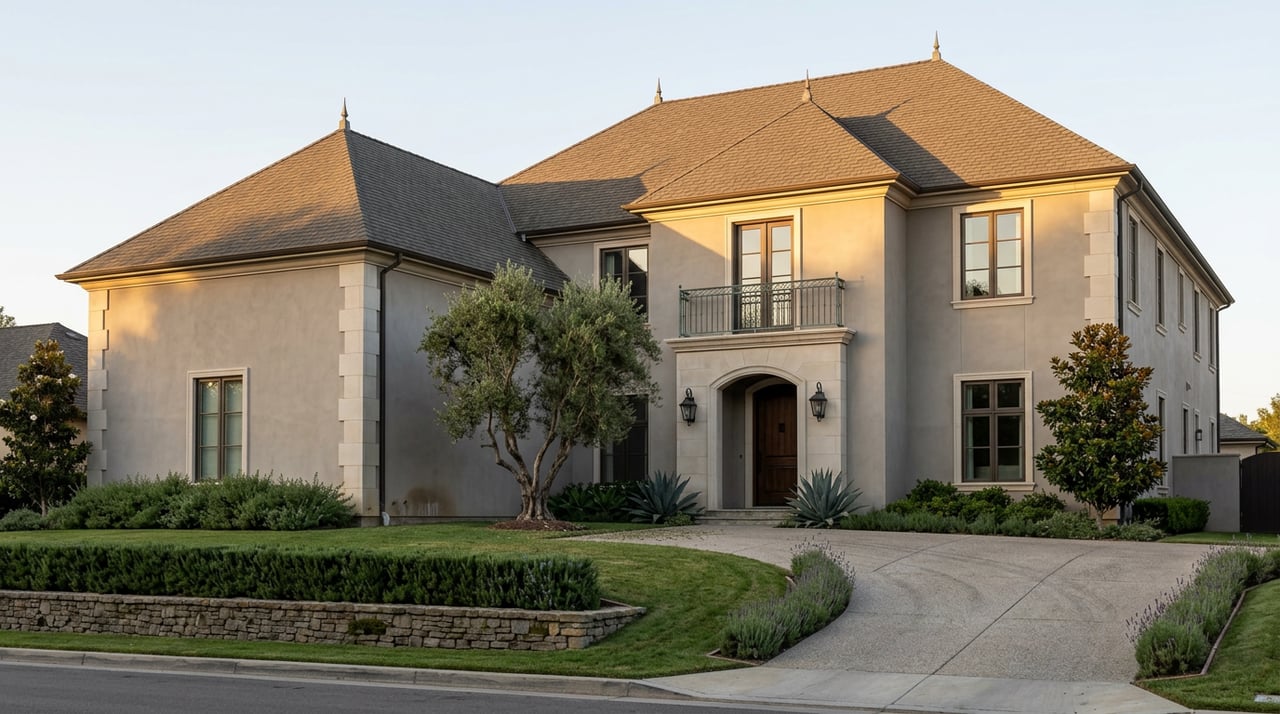
If someone quoted you a median home price of $967,000 for Glendora, which house were they describing? Not the 1950s three-bedroom near the historic Village, walkable to Rubel Castle and the shops along Glendora Avenue. And not the custom hillside estate off a private drive north of Sierra Madre Avenue, either. The median describes neither, because it's an average built from two housing markets that behave nothing alike, stitched together under one city name.
That distinction matters more than it sounds like it should. Anyone actively comparing Glendora to La Verne, Claremont, or Upland right now is doing math against a number that was never meant to represent a single type of house. Treat it as one market and you'll misjudge value on both ends of town.
The Two Glendoras Behind One Number
Glendora grew up as a citrus town at the base of the San Gabriel Mountains, and that history still shapes its housing stock in a literal way. The older grid south of the foothills, closer to the historic Route 66 corridor and Glendora Village, holds mostly mid-century tract homes on standard lots. It's walkable, it's dense by Glendora standards, and it's where most of the city's day-to-day retail and dining life sits, from the roughly three dozen shops and restaurants inside The Village Glendora to newer draws like Alosta Brewing Co.
Head north past that corridor and the housing changes shape entirely. Larger lots, custom or heavily customized builds, longer private driveways, and view premiums define what local listing data labels the Foothills submarket, centered on neighborhoods like Morgan Ranch in North Glendora. These aren't two flavors of the same product. They're different products that happen to share a mailing address, split loosely between the city's 91740 and 91741 postal codes.
What the Actual Numbers Say
Over the three months ending in July 2026, Glendora's citywide median sale price sat at $967,000, down 2.1 percent from the same period a year earlier, with a median price per square foot of $519, down 3 percent year over year. Homes sold in about 34 days on average, and 84 changed hands in July, down from 116 the year before. Separately, an average home value figure for the city put the number closer to $832,600, down 1.6 percent year over year and moving to pending in roughly 11 days.
Now look at the Foothills submarket specifically. The average house price there ran about $1.1 million in the same recent stretch of listing data, essentially flat year over year, but selling far slower, around 76 days on average, against a market that Redfin's own competitiveness scoring rates as only somewhat competitive compared to the city overall.
| Citywide (trailing 3 months) | Foothills submarket | |
|---|---|---|
| Typical price | $967,000 median sale price | $1.1M average house price |
| Price per square foot | $519 | Not separately reported, but implied higher given lot size and finish level |
| Days on market | ~34 days | ~76 days |
That gap, somewhere between $130,000 and $270,000 depending on whether you anchor to the median sale price or the average home value, isn't noise. It's the price of the geography itself: bigger parcels, newer or heavily renovated construction, and the kind of privacy that a tract lot near the Village simply doesn't offer.
Why the Split Runs Along Route 66
The dividing line isn't arbitrary. Historic Route 66 functions as the city's commercial spine, and the city has an active Route 66 Corridor Specific Plan guiding redevelopment along it, covering multiple subdistricts that include a Town Center Mixed Use zone and a Grand Avenue Commercial Gateway. That corridor is also home to retail assets that show how differently the two halves of Glendora get valued even in commercial terms. A fully leased retail building on East Route 66 was listed in 2026 at nearly $9 million on an 18,000-square-foot footprint. A separate retail property on West Foothill Boulevard, positioned as flexible enough for medical office or assisted living use, was marketed the same year at $6 million for a smaller building. Flexibility and location on the corridor drive value even outside the residential market, which is a useful signal for anyone trying to understand why the city prices the way it does.
North of that corridor, the terrain itself does the work. Larger lots, longer setbacks, and mountain views push construction costs and land values up independent of anything happening in the flatter grid below.
Public transit access has also shifted recently, though not in a way that erases this split. The Metro A Line extension to Glendora, San Dimas, La Verne, and Pomona opened in September 2025, adding a regional rail connection the city didn't have before. It's a real amenity, and it matters for commuters. But a new station doesn't touch lot size, doesn't touch construction vintage, and doesn't touch the foothill view premium. The two Glendoras were priced differently before the station opened, and they're priced differently now.
What This Means If You're Comparing Cities, Not Just Streets
Buyers cross-shopping Glendora against La Verne, Claremont, or Upland tend to pull one number, drop it into a spreadsheet, and move on. That's the mistake. A citywide median from Glendora tells you almost nothing about whether a specific street will feel more like the Village or more like the hills.
The better approach is to price by sub-area first and city second. If you're looking at homes near Glendora Avenue or the Grand and Alosta retail corridor, your realistic comparison set is the flatland tract stock, priced closer to that $832,000 to $967,000 band. If you're looking north of the foothill boundary, your realistic comparison set is custom and semi-custom construction priced well north of $1 million, and your comparison should be against similar hillside inventory in La Verne or Claremont's own upper elevations, not against Glendora's citywide average.
This also changes how you read price per square foot. A flatland home at $519 per square foot might be priced fairly for its lot and vintage. A foothill custom build at a similar per-square-foot number could be underpriced relative to its land and view, or it could mean the finish level doesn't match the location, which is worth flagging to an inspector before you write an offer.
The Line Isn't on a Map, But You Can Still Find It
There's no official boundary sign between flatland Glendora and Foothills Glendora. The way to find it in practice is to walk it. Start at Glendora Village, where the shops along Glendora Avenue and the old bank building turned restaurant still anchor the downtown feel, and drive north. Somewhere past the point where lots stop being uniform and driveways start getting longer, you've crossed into the other market. That's the line that actually prices homes in this city, not the citywide median that gets quoted on the portals.
A Few Questions Worth Settling Before You Compare Cities
Is the "Foothills" submarket an official city boundary? No. It's a commonly used real estate label for the northern, hillside portion of Glendora, not a zoning designation. The practical boundary is the terrain and lot pattern, not a line on a city map.
Does a higher price per square foot always mean a worse deal? Not on its own. Foothill lots carry more land, more privacy, and view premiums that a flatland comparison won't capture. The number only means something once you're comparing homes with similar lot size and location within the same submarket.
Will the new Metro A Line station change this pricing gap over time? It's too soon to say. The station opened in September 2025 and adds real transit access, but it doesn't change lot size, construction vintage, or elevation, which are the actual drivers of the gap between flatland and foothill pricing in Glendora.
If you're trying to figure out which side of that line makes sense for your budget, your commute, and the kind of house you actually want to own, that's a conversation worth having before you fall in love with a listing photo. Jessie Rodriguez and the team at Coldwell Banker Icon work these Glendora sub-markets block by block, and can walk you through which streets are pricing like the Village and which are pricing like the hills, before you make an offer on either.