If you've spent any time comparing La Verne to Claremont or Upland this year, you've probably had the same thought: doesn't the new train station change the math? A Metro stop landed in this historic downtown last year. Old Town bungalows near the University of La Verne should be worth more than they were before, shouldn't they?
The station is real. Trains have been running from La Verne/Fairplex since September 19, 2025, with service to Pasadena in about 31 minutes and downtown Los Angeles in about an hour, departing every 8 minutes at peak and every 10 midday and on weekends. What hasn't happened yet is the thing that actually moves home values around a new stop, and the city's own paperwork shows the price of finishing it just climbed again.
The Station Opened. The District Didn't.
When people talk about a "transit premium," they usually mean something specific: a walkable pocket of new cafes, small apartments, and retail clustered around the platform. That's exactly what the city's Old Town La Verne Specific Plan calls for around the new station, apartments, condominiums, retail space, a business park, and a hotel, financed partly through an Enhanced Infrastructure Financing District that Los Angeles County joined for the first time and funded through future property tax increment. Planning documents tied to that district projected roughly 600 jobs once built out.
None of that exists on the ground yet. What exists today is a finished platform at Arrow Highway and E Street, walkable from the University of La Verne campus and one block from the Fairplex, with three public sculptures by artist Blue McRight built around the theme of citrus and water and echoing the ceramic tile pattern from the city's Weymouth Tower.
That's the distinction a buyer needs to hold onto while reading comps. A completed rail stop is a fact you can verify today. A finished transit district is a construction schedule, and schedules move.
The Bridge That Explains the Delay
The clearest evidence that the district is still years away sits in a single line item: the pedestrian bridge meant to connect the station to the Fairplex and the Metrolink stop across Arrow Highway. When the San Gabriel Valley Council of Governments applied for federal grant funding in 2024, the roughly 1,500-foot bridge was estimated at about $16 million, with construction penciled for a late 2025 start and an 18-month build.
By the time it came back before the La Verne City Council in early August 2026, the engineer's estimate for the base bridge had grown to roughly $18 million, with another $3.2 million in city-requested architectural upgrades layered on top as a separate line, and no finalized number as of that meeting. The city had already committed $1.8 million toward the project through its infrastructure financing district. The rest is still being negotiated.
That bridge is the physical link between the station platform and the Fairplex side of the Specific Plan area. Its cost has moved in the wrong direction twice now, which tells you more about the district's actual timeline than any press release from the station's June 2025 dedication ceremony.
Foothill Boulevard Is the Real Line on the Map
If the train isn't yet the variable moving prices, something else is, and it isn't subtle once you split the city in half. Foothill Boulevard is the boundary that actually separates two different La Verne markets.
- North of Foothill: larger lots, newer or custom construction, gated communities, and an amenity pull from Marshall Canyon Regional Park, Marshall Canyon Golf Course, Sierra La Verne Country Club, and the oak canopy through Live Oak Canyon. In the three months ending June 2026, price per square foot in this pocket ran roughly 17 percent higher than the same period a year earlier, even as the median sale price eased slightly over that same window.
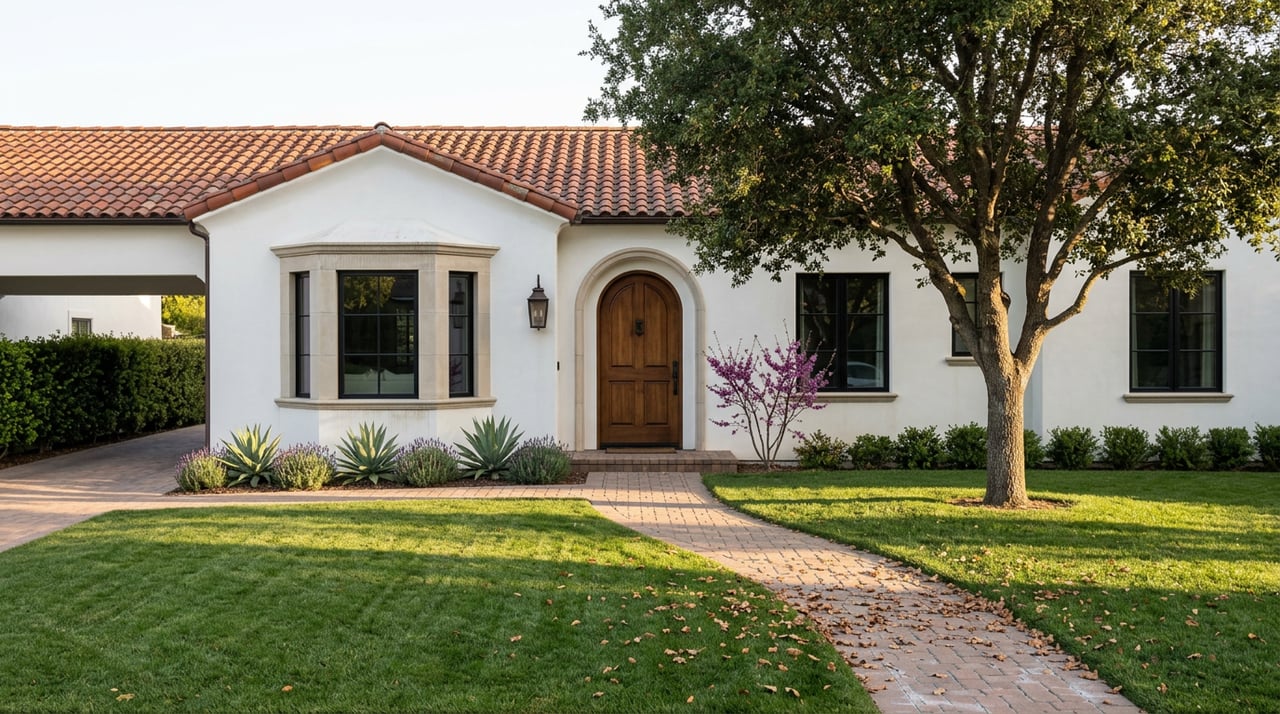
- South of Foothill, in Old Town and around the University of La Verne: 1930s bungalows sitting next to postwar infill, walkable to the village and now to the station platform, on smaller lots with older mechanical systems that an inspector will spend real time on.
The train sits in the second pocket. The price-per-square-foot pressure this year has shown up harder in the first one, for reasons that have nothing to do with rail access and everything to do with lot size, newer construction, and country club proximity. That's the opposite of what a "transit premium" story would predict if the district around the station were actually finished.
Why the Citywide Number Won't Tell You Which Story Is True
Here's where the citywide median becomes actively unhelpful. In the first quarter of 2026, La Verne's median sale price came in at $887,000, up 12.4 percent year over year, but only 46 transactions closed that quarter, a 20.7 percent drop in volume from the year before, at a median of $526 per square foot. For comparison, the broader Los Angeles County median sat at $875,000 over that same window.
When a city clears fewer than fifty sales in a quarter, a handful of closings in either direction can swing the median by six figures without reflecting any real shift in what a specific street is worth. A 12 percent jump in the citywide median doesn't tell you whether Old Town is repricing because of the new station or whether a couple of foothill customs north of Foothill Boulevard happened to close that quarter and dragged the average up. You need the pocket, not the print.
How to Actually Read an Old Town Listing Right Now
- Ask when the comps for a specific listing closed, and whether they closed inside Old Town or somewhere else in the city. A citywide comp set will mislead you here more than in most markets.
- Check the status of the pedestrian bridge before you weight a walk to the Fairplex into your decision. As of the most recent city council item, the cost was still unresolved and no firm completion date had been set.
- Confirm which parcels actually fall inside the Old Town La Verne Specific Plan boundary and which are funded through the city's infrastructure financing district. Not every address in Old Town sits inside that footprint.
- Separate "walking distance to a train platform" from "walking distance to a finished mixed-use district" before you weigh it against a foothill lot with a longer drive but amenities that already exist.
The station is a genuine change to this city. It just isn't the whole change yet, and pricing it as if the surrounding district were already built is how a buyer overpays for a promise instead of a property.
Frequently Asked Questions
Has construction started on the pedestrian bridge to the Fairplex? As of the most recent city council item on the project, the cost estimate was still being finalized and no firm construction timeline had been locked in, even though an earlier plan had targeted a late 2025 start.
Does living near the La Verne/Fairplex station mean daily errands are walkable? The station puts you within walking distance of the University of La Verne campus and one block from the Fairplex gate. Most other Old Town errands still involve a drive, the same tradeoff that applies across most of the city.
Is Old Town actually cheaper than North La Verne right now? Directionally, yes, on a price-per-square-foot basis. But the gap reflects lot size, age of construction, and mechanical condition at least as much as train access, and any real comparison should be run address by address rather than off citywide averages.
If you're weighing an Old Town bungalow against a foothill lot north of Foothill Boulevard, the comps that matter are the ones inside your specific pocket, not the citywide median. Jessie Rodriguez can walk you through those comps street by street, including what's actually built around the new station and what's still a line item in a city council packet, before you write an offer.